Selling digital products has become one of the most accessible ways for creators to make money online. Over the past few years, more creators, educators, designers, and freelancers have started turning their knowledge and skills into products that can be sold repeatedly without inventory or shipping.
Unlike physical products, digital products can be created once and sold many times. A template, guide, course, or digital tool can generate income long after it is published.
At the same time, creators are building audiences on platforms like Instagram, TikTok, and Twitter. Instead of relying only on brand deals or sponsorships, many are monetizing their audiences directly by selling digital products.
Whether you have a small niche audience or thousands of followers, digital products allow you to package your expertise into something valuable that others are willing to pay for.
This guide will walk you through how creators are selling digital products today, how to choose your first product, and the easiest way to start selling online.
Popular digital products creators sell
One of the best things about digital products is that almost any skill can be turned into something sellable. Creators in many different industries are already doing it.
Here are some of the most popular digital products creators sell today.
Notion Templates
Notion templates are extremely popular among productivity creators, founders, and students. These templates help people organize tasks, track habits, manage projects, or plan content.
Because Notion is widely used, a well-designed template can sell thousands of times.
Figma Templates
Designers often sell UI kits, website layouts, and mobile app templates created in Figma. These products help other designers or developers start projects faster.
They are especially popular among indie developers and startups.
Instagram Presets
Photographers and creators frequently sell Lightroom or mobile presets that help people edit photos with a specific style. These presets are easy to distribute and are commonly promoted directly on Instagram.
PDF Guides
Many creators sell downloadable guides that teach a specific skill or solve a particular problem.
Examples include:
-
fitness programs
-
productivity systems
-
marketing playbooks
-
business guides
These guides are simple to create and can be very valuable when they provide actionable advice.
Online Courses
Courses are one of the highest-value digital products. They allow creators to teach complex skills through video lessons, tutorials, and downloadable materials.
Courses work well for topics like:
-
programming
-
design
-
marketing
-
fitness
-
finance
Digital Planners
Digital planners and journals are popular products among productivity creators and students. These planners can be used on tablets or apps like GoodNotes and help people plan their days, weeks, and goals.
How to Choose Your First Digital Product
Many creators struggle at the beginning because they try to build something too complex or too broad. The best first product is usually simple and focused.
Here are a few tips to help you choose your first digital product.
Solve a Specific Problem
The most successful digital products solve a clear problem.
Instead of creating something generic, think about what your audience struggles with. If people often ask you the same questions or request advice on a specific topic, that is a good signal that there is demand for a product.
For example:
-
a designer might create a UI kit to speed up website design
-
a fitness creator might sell a structured workout program
-
a productivity creator might build a task management template
The clearer the problem, the easier it is to sell the solution.
Build From What You Already Know
Your first product should come from your existing knowledge or experience.
You do not need to be the world’s top expert. You only need to know something that can help someone who is a few steps behind you.
Many successful digital products come from simple insights, workflows, or systems that creators already use in their own work.
Keep Your First Product Simple
A common mistake is trying to launch a huge course or complex product as the first release.
Instead, start small.
A simple template, guide, or toolkit can be created much faster and still provide real value. Once you validate that people are interested, you can always expand into larger products later.
Launching quickly helps you learn what your audience actually wants.
How to Create Your Digital Product
Creating a digital product does not require expensive tools or complicated setups. Most products can be created with software you may already use.
Here are some common tools creators use.
Design Tools
Design tools are often used to create templates and visual products.
Popular options include:
-
Figma for UI kits and design templates
-
Canva for planners, guides, and social media assets
-
Adobe Lightroom for photo presets
These tools make it easy to export files that customers can download and use.
Document Tools
For guides, ebooks, or instructional products, simple document tools are enough.
Examples include:
-
Google Docs
-
Notion
-
Apple Pages
-
Microsoft Word
You can export your final document as a PDF and sell it as a downloadable file.
Course Platforms
If you want to build a course, you may need tools for recording and hosting videos.
Many creators use:
-
screen recording software
-
presentation tools
-
video editing software
Courses usually include video lessons, worksheets, and downloadable materials.
Where to Sell Digital Products
Once your product is ready, the next step is choosing where to sell it. Several platforms allow creators to accept payments and deliver digital files.
Here are some common options.
Gumroad
Gumroad is one of the most well-known platforms for selling digital products. It allows creators to upload files, set prices, and sell products without building a full ecommerce website.
Many independent creators use Gumroad as a platform for selling digital downloads online.
However, some creators find that traditional storefront platforms can feel heavier than necessary when they only want to sell a few products directly from their social media audience.
Lemon Squeezy
Lemon Squeezy is another platform designed for selling digital products and software. It provides payment processing, licensing tools, and subscription management features.
It is commonly used by developers and SaaS founders who sell software or digital tools.
For creators selling simple digital downloads, however, some of these features may be more than they need.
Shopify
Shopify is a powerful ecommerce platform used by many online businesses. While it supports digital products, it is often better suited for larger stores that sell many products or physical goods.
For creators selling a few digital items, it can sometimes feel more complex than necessary.
Link-in-Bio Stores
Another emerging option is link-in-bio storefronts designed specifically for creators. These tools allow creators to sell digital products directly from the same link they share in their social media bios.
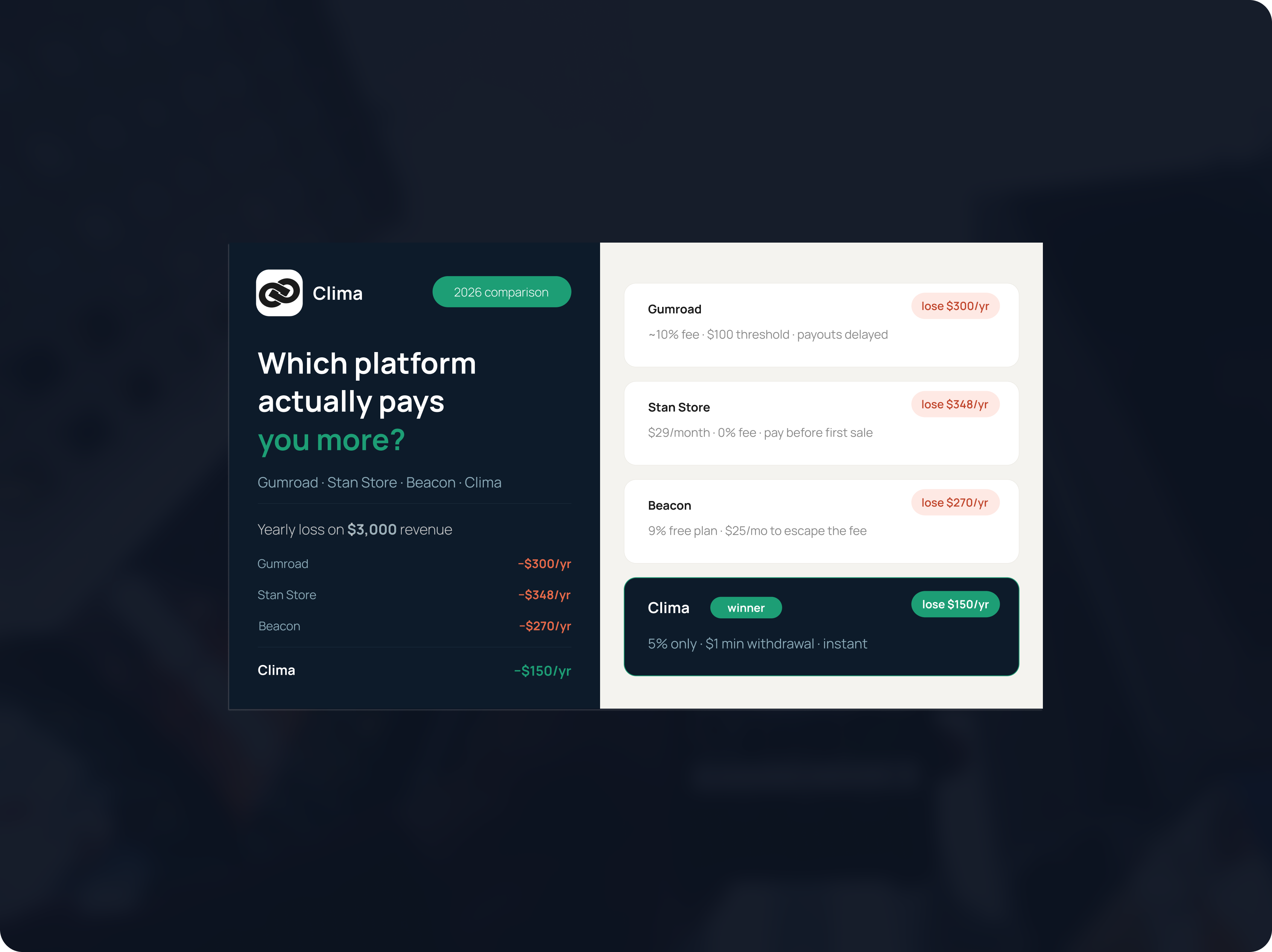
Platforms like Clima make it possible to connect Stripe, upload a product, and start selling in minutes without building a full ecommerce website.
This approach is especially useful for creators who promote their products primarily through social media.
How to Promote Your Digital Products
Creating a great product is only part of the process. You also need a way for people to discover it.
Most creators promote their digital products through the platforms where they already have an audience.
Instagram is one of the most common platforms for selling digital products.
Creators often promote products through:
-
reels and short videos
-
carousel posts
-
stories
-
highlights
A link in bio usually directs followers to the product page.
TikTok
TikTok has become a powerful discovery platform for creators. Short videos explaining a concept, sharing tips, or demonstrating a product can quickly reach large audiences.
Many creators use TikTok to generate interest and then direct viewers to their product link.
X (Twitter)
Twitter (now known as X) works well for creators in tech, business, and design communities. Threads, tips, and educational posts can attract people interested in your niche.
These posts often lead readers to a product page or landing page.
Email Lists
An email list is one of the most reliable ways to promote digital products. Unlike social media platforms, you own your email audience and can communicate directly with subscribers.
Many creators build email lists by offering free resources, newsletters, or tutorials.
Your Link in Bio
Your link in bio is often the central hub where followers discover your products. Instead of sending people to multiple pages, many creators place all their products in a single bio storefront.
This makes it easy for followers to explore and purchase what you offer.
Conclusion
Selling digital products is one of the most powerful ways for creators to turn their knowledge, skills, and audience into income.
You do not need a large team, a complex website, or months of development to get started. Many successful creators begin with a simple template, guide, or toolkit that solves a real problem.
The most important step is simply starting.
Choose a small product idea, create something valuable, and share it with your audience. As you learn what works, you can expand into more products and build a sustainable creator business around them.